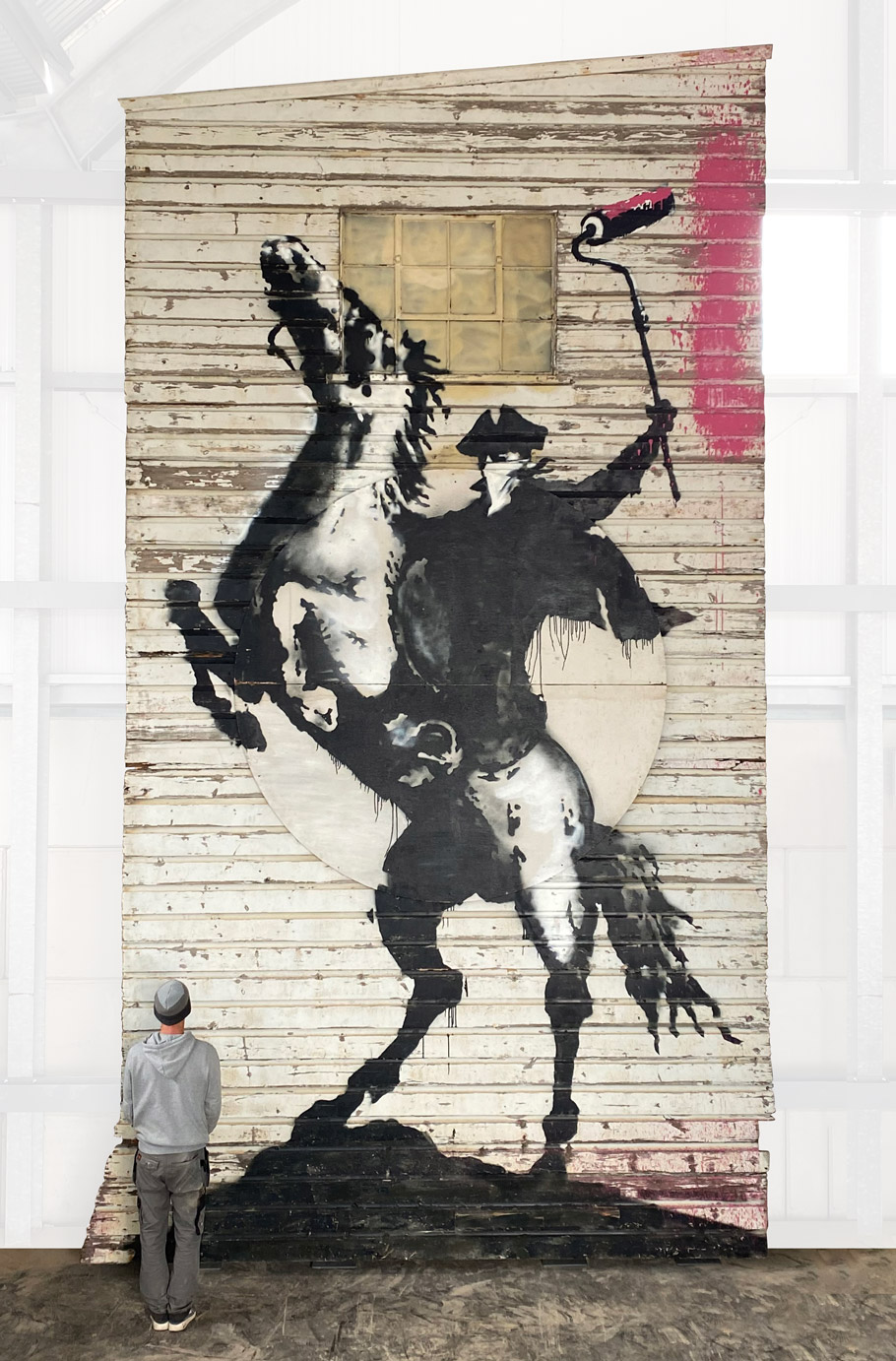
Banksy's Highwayman
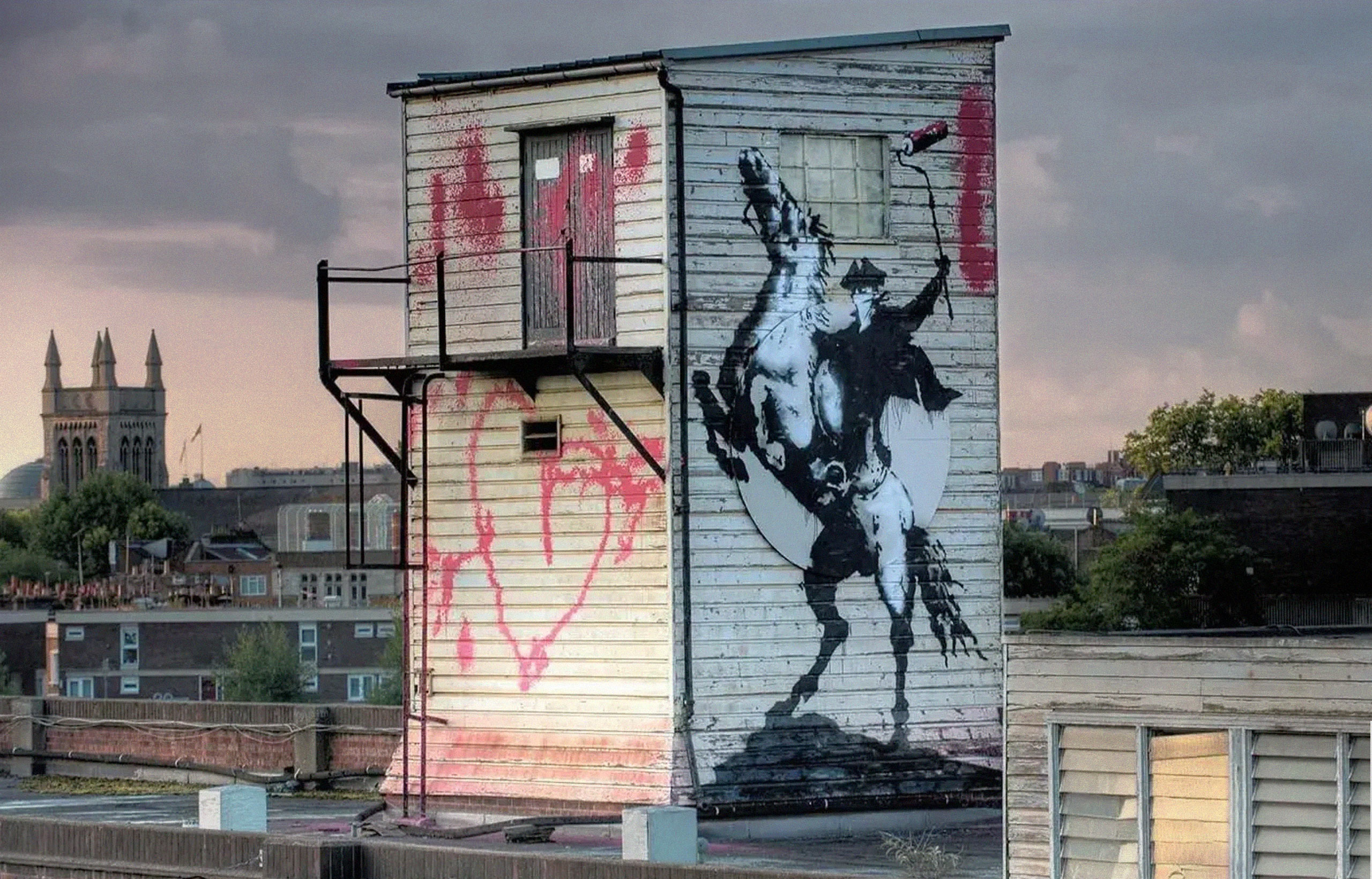
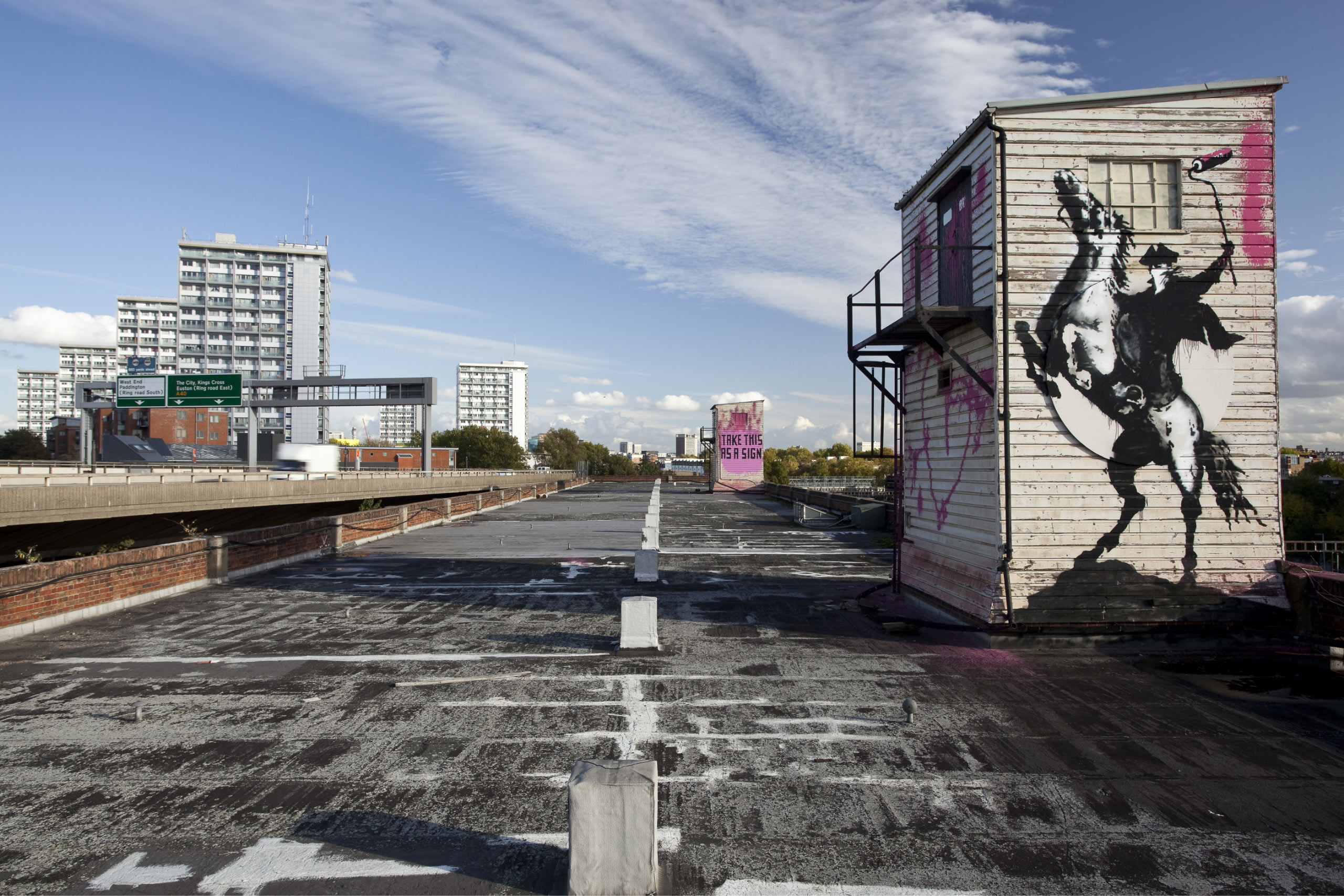
Location - Great Western Studios
A disused railway warehouse known as the Old Lost Goods Building, in Westbourne Park, London was converted into a complex for visual artists and renamed Great Western Studios in 1994.
For over 15 years, more than 270,000 daily visitors coming into the centre of London from the west, either by car, train or underground, including all traffic from Heathrow Airport, would have passed this strange long red brick building.
Situated between the A40 elevated flyover on one side and the Paddington mainline and underground lines on the other, you could see the vast structure raised on concrete stilts so that trains could pull underneath alongside a pair of 160m long platforms and unload cargo directly into two enormous industrial elevators.
On the opposite side at roof level, the passing A40 traffic could see a vast expanse of flat roof with the two white wooden clad three story elevator towers, as if castle turrets from a bygone era.
In the small hours of August 24th 2009 Banksy used the white towers and studios signage as a canvas. At dawn, London awoke to a new Highwayman, standing over six metres tall and armed with paint roller and bright fuchsia pink paint.
The image of Banksy's Highwayman first appeared in the summer of 2009 at Banksy's ground breaking Bristol Museum show.
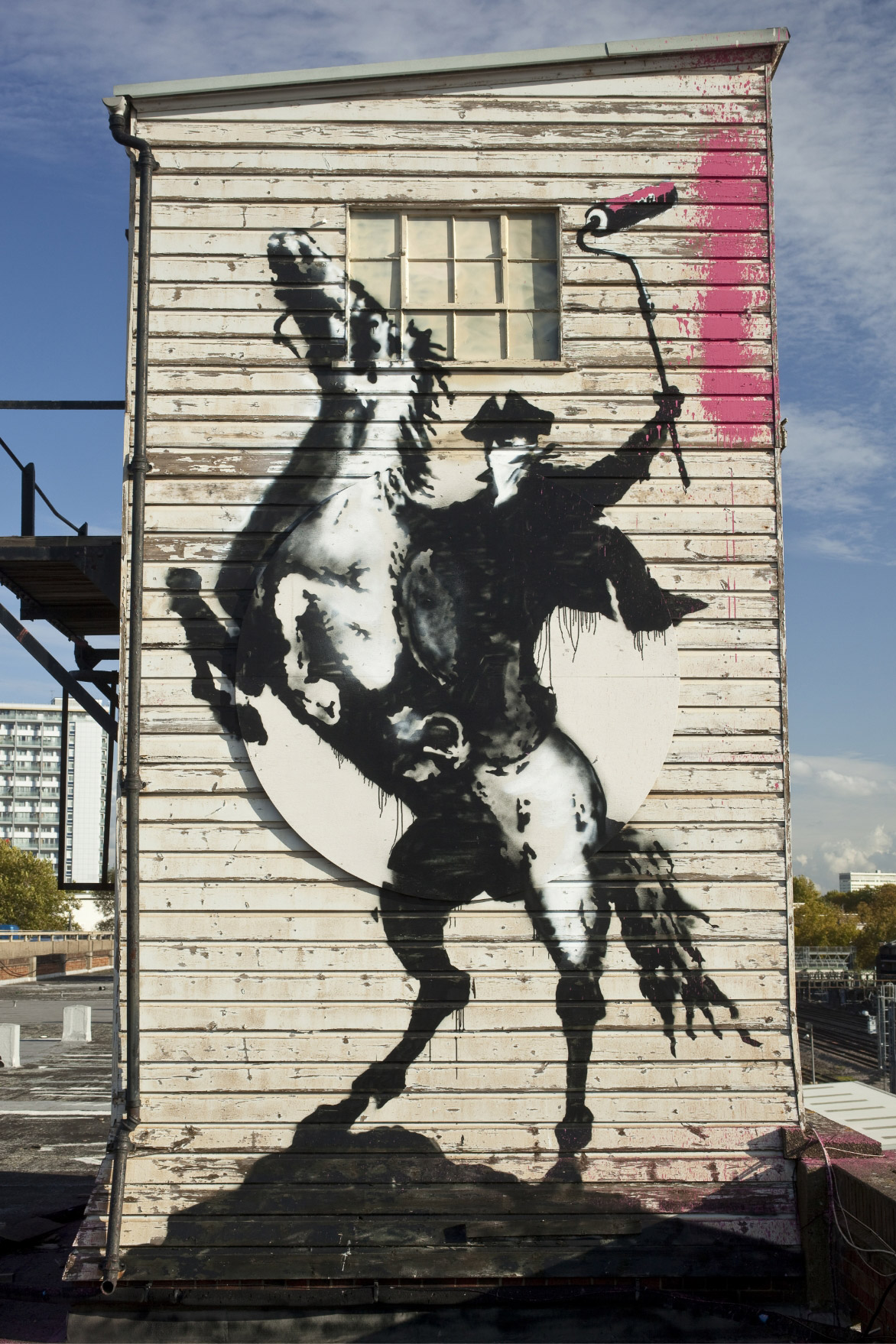
It must have been a hard task to create something on such a scale, on an exposed rooftop in front of a constant stream of traffic. Being seen was always going to be a risk even with access permission from the artist studio's owners and it would be likely that the police would turn up, and they soon did. But a cover story - the filming of a making of an artwork - not too far from the blazingly obvious, was devised to deter them. Hiding in plain sight Banksy had brought a small film crew to follow him onto the roof to record the entire event and some of this ended up in the early sections of his film Exit Through The Gift Shop.
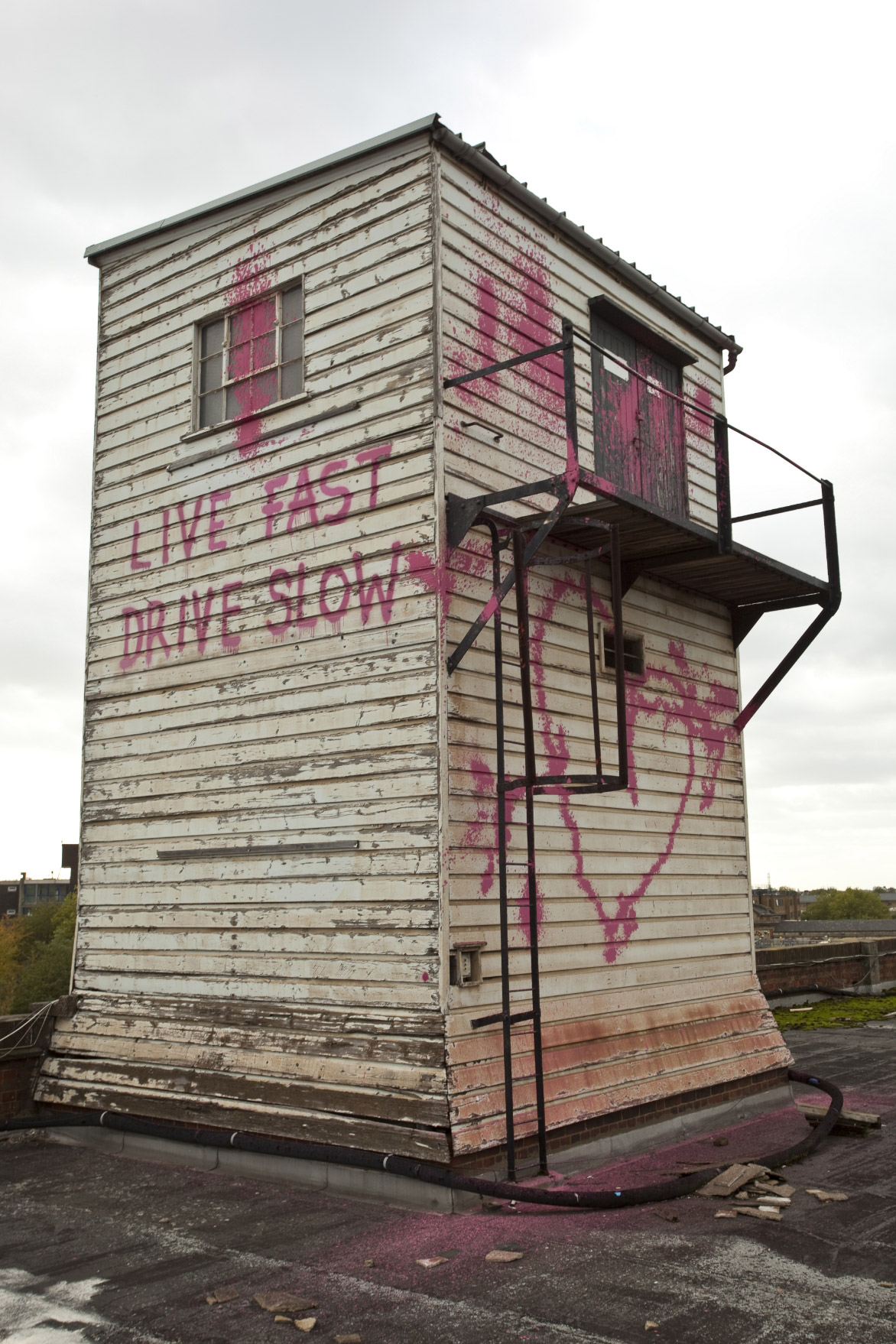
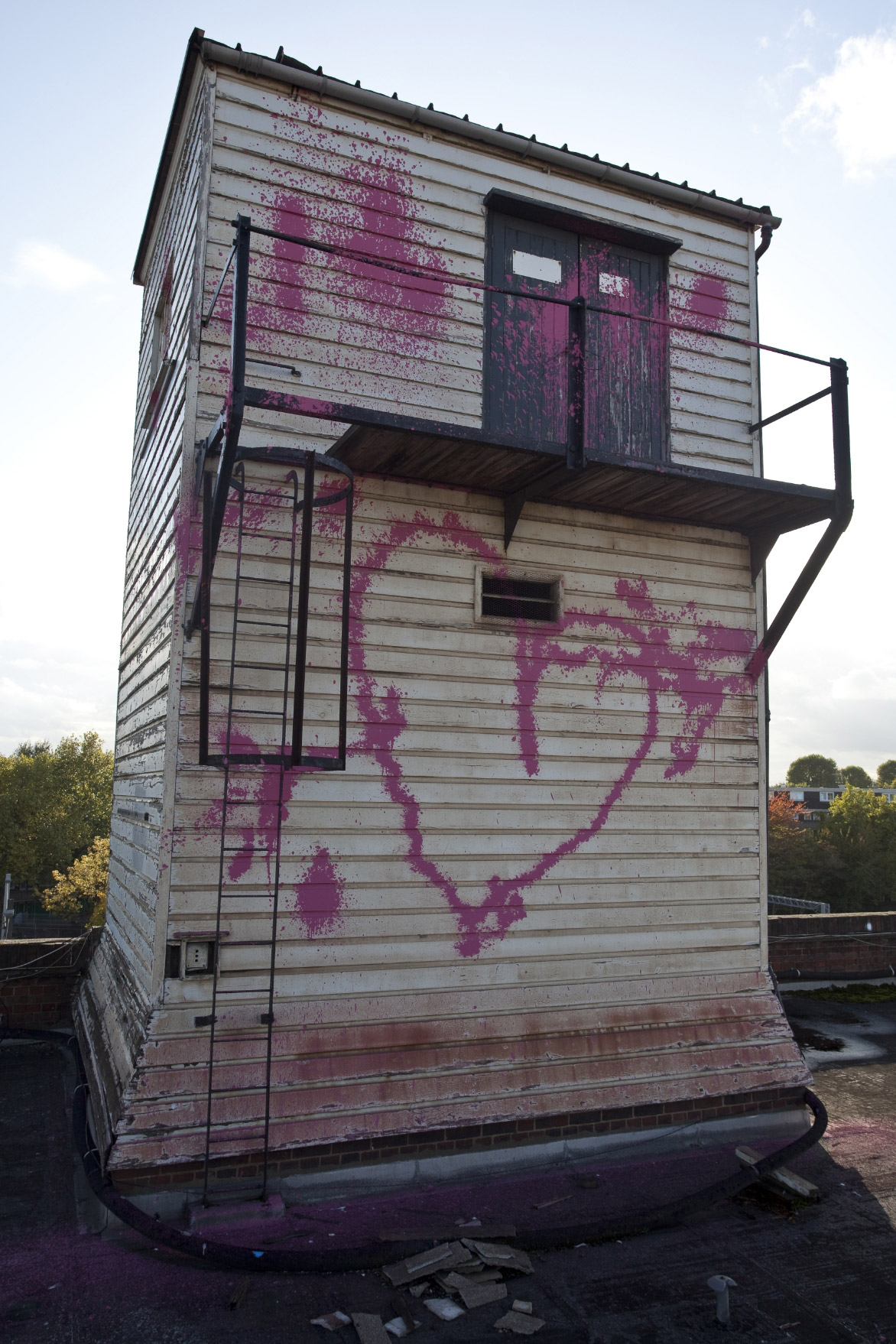
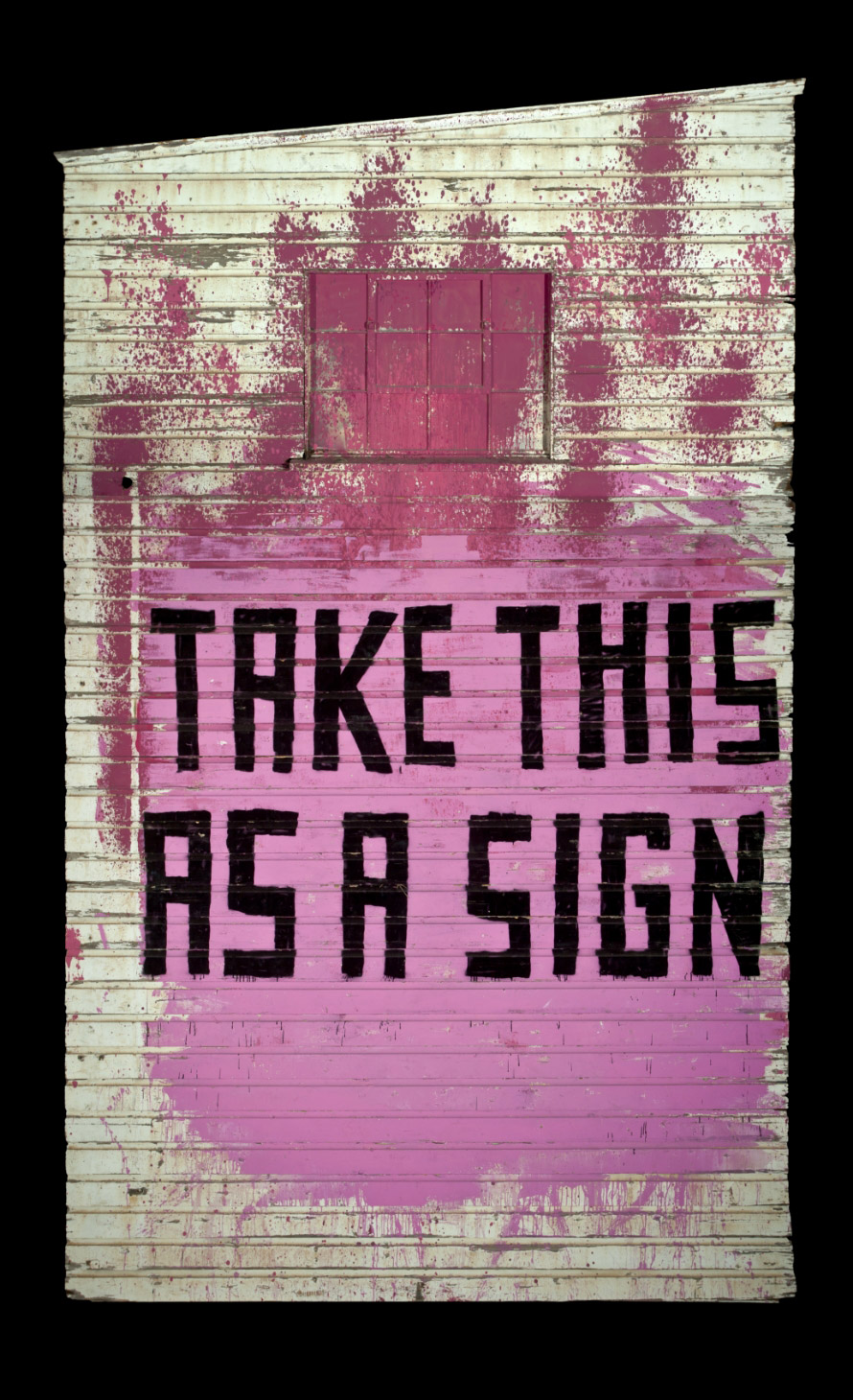
A week later Banksy returned and made some minor changes to the Highwayman's saddle and adorned the second tower with the slogan, TAKE THIS AS A SIGN.
The building was soon to disappear to make way for the Crossrail scheme, a huge tunnel linking west to east London, but before it was demolished later that year, Banksy's The Highwayman was saved.
The significance of the place, a longtime centre for artists, the moment of the studios impending closure and demolition and placing the Highwayman looking west over the modern day highway, all add to the piece's opportune timing.
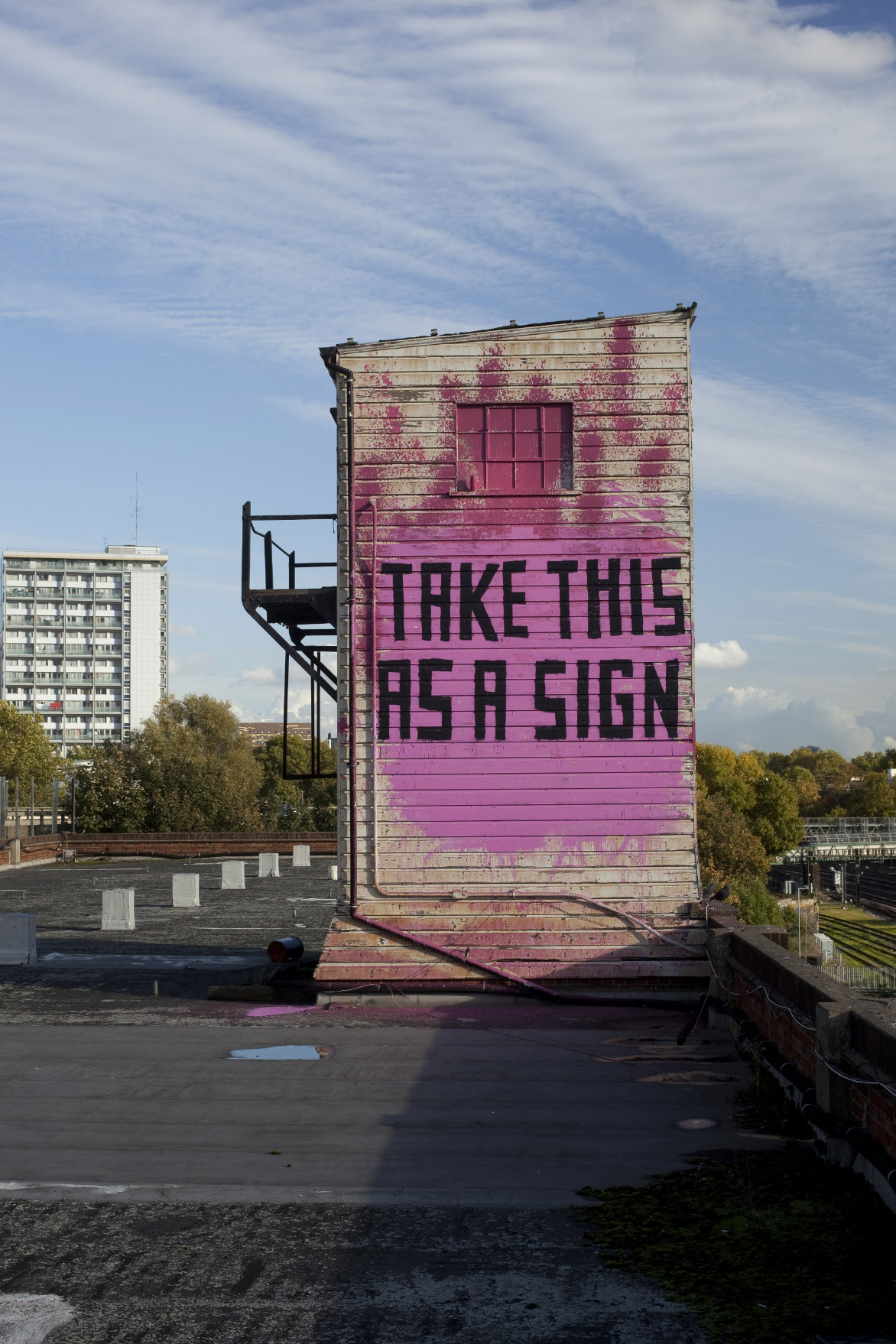
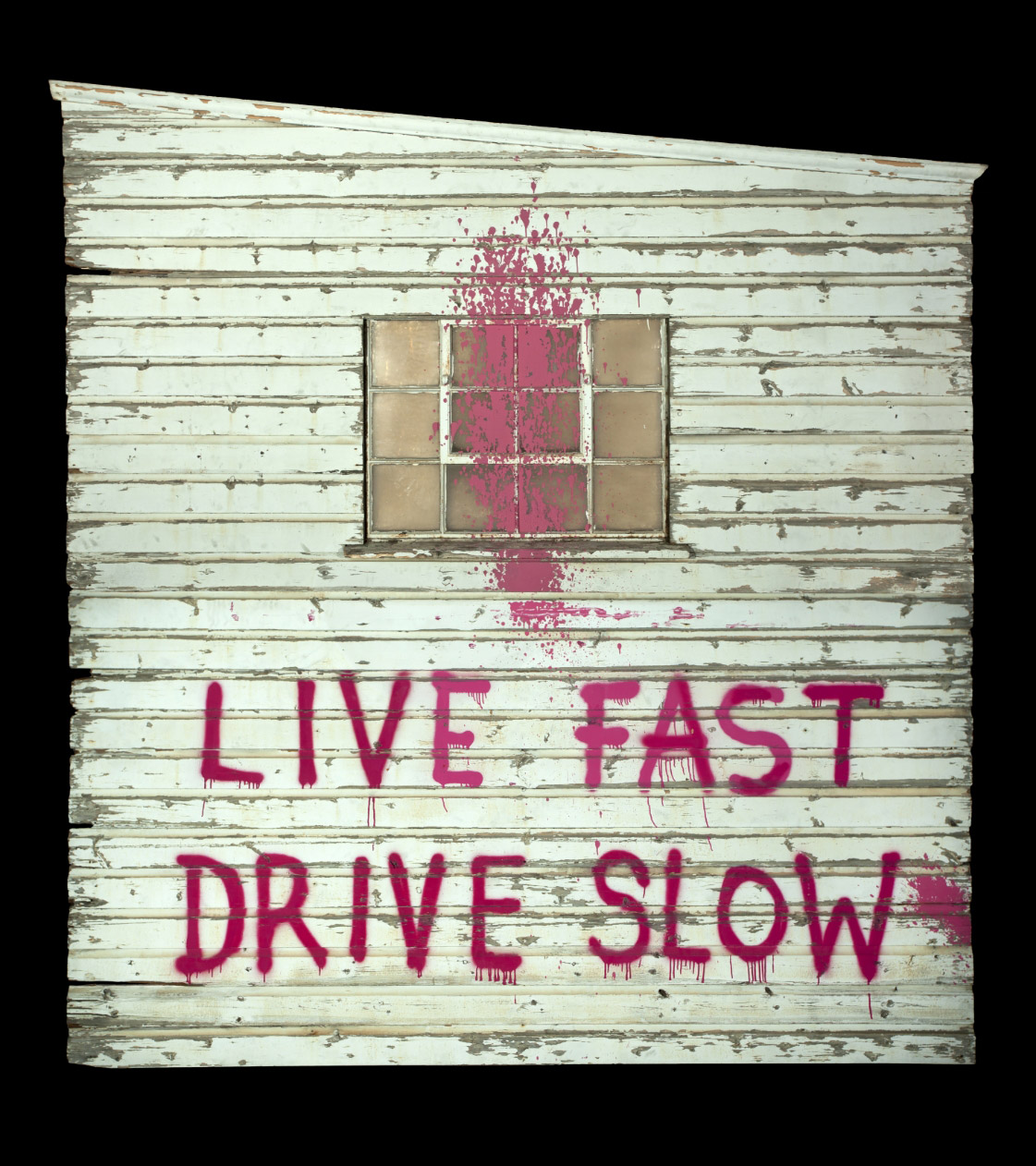
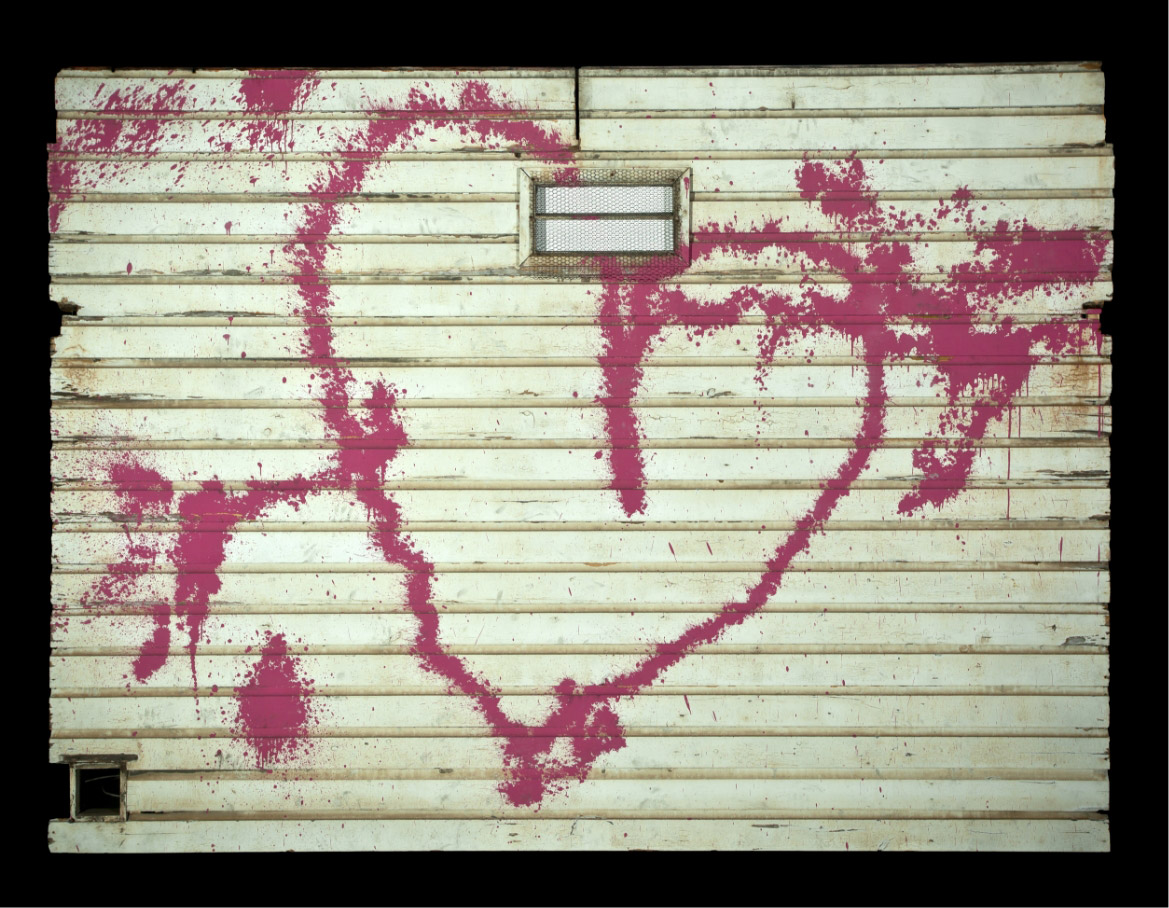
The 4 pieces: Highwayman, Heart, Sign and Live, were sensitively removed and delivered to a well-known fine-art conservation & fabrication company in London.
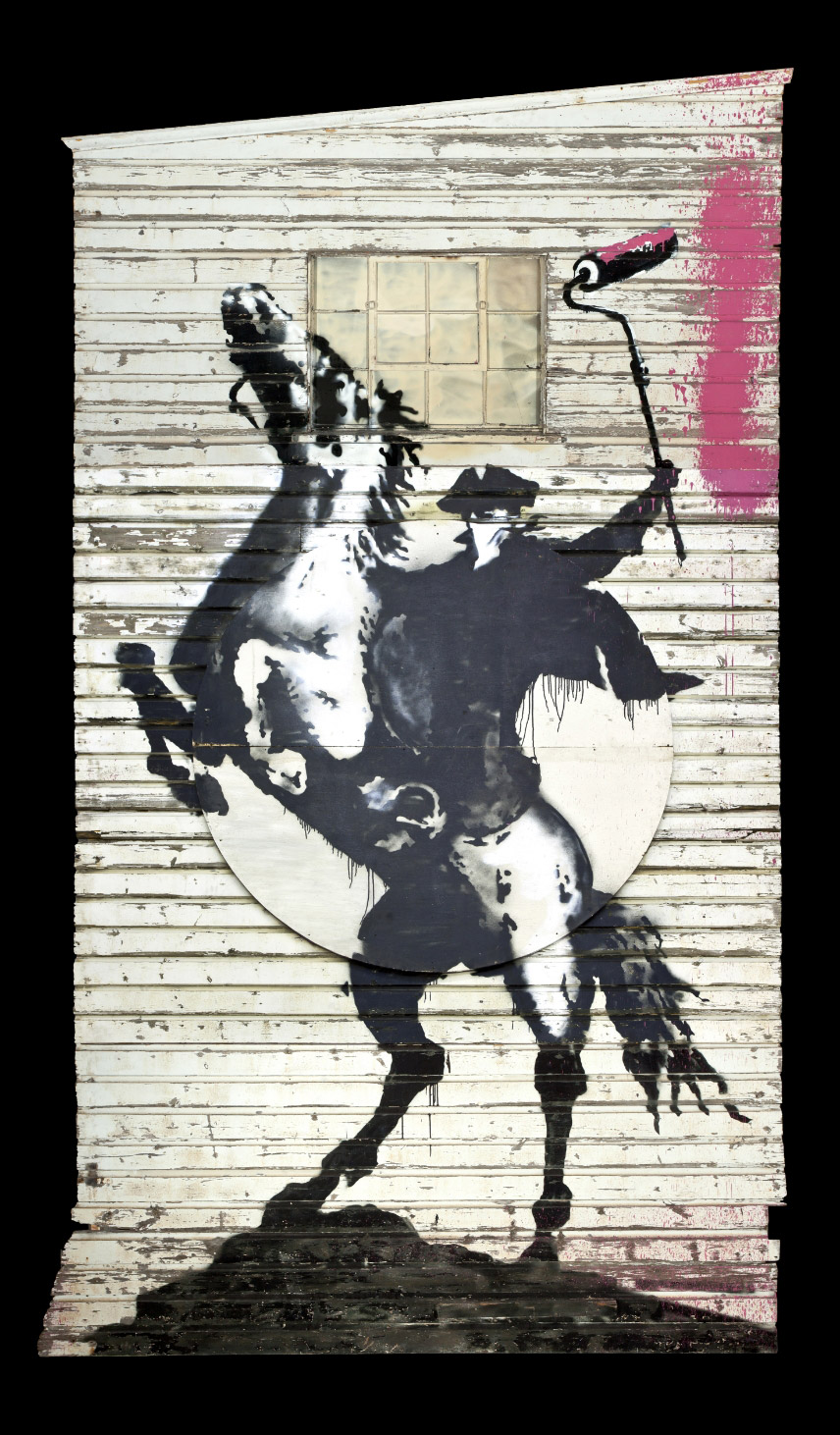
The conservators assessed the painted timber and brought in a respected firm of structural engineers to oversee the design and development of a timber panel & metal frame hanging and installation system.
The artwork comes with the structural engineers report on the installation system and the conservator's instructions to enable moving & re-installation, a brief insert is included below. The artworks have been separated into panels that have their own frames that then fix to a master hanging structure.
For ease of transport and security, the panels and their frames hang on stillages that have themselves been carefully packed into two 20ft x 8ft x 9ft new shipping containers.
Installation
The contents of two containers and packing case, when correctly installed, form four separate panels referred to as 'Highwayman', 'Heart', 'Sign' and 'Live'.
These are clearly identified through the images and labelling on the separate components.
'Highwayman', is the largest at approximately 6.7 m tall. It is made up from four separate panels on two wall frames, each of the wall frames is in two parts.
'Sign' is made up from three separate panels on two wall frames, each of the wall frames is in a single part.
'Heart' is made up from two separate panels on two wall frames, each of the wall frames is in a single part.
'Live' is made up from two separate panels on two wall frames, each of the wall frames is in a single part.
The supporting ladder frames for each set of panels are fixed to an appropriate wall and then the panels are lifted up and hooked onto the ladder frames.
The setting out dimensions for each set of ladder frames is included.
The procedure for handling the components and the process of their installation is included in the document.
Sale details
The current guardians have looked after this piece for some years and feel it is now time for it to go to a new home, where it can be viewed at scale.
Banksy's Highwayman is 6.7m high x 3.6m and needs a 9m high space to be installed easily.
If you are interested in finding out more about how you might purchase the pieces, please contact us below.
Interested parties will be asked to be vetted by Boodle Hatfield, who will be handling any sale.
The current guardians of the piece intend that any proceeds continue their support for the visual arts, creators, makers and doers.
Charity support
The current guardians lost both parents to cancer, and on completion of the sale pieces, will be donating 25% of the proceeds to the cancer charity The Christie Charity which supported the treatment and care of their parents.
Contact for interest:
enquiries@banksyhighwayman.com